Gulf Coast climate patterns produce severe flea (*Ctenocephalides felis*) and tick (*Rhipicephalus sanguineus*) pressure due to extended humidity windows exceeding 70% and minimal winter freezes. In Houston properties,…
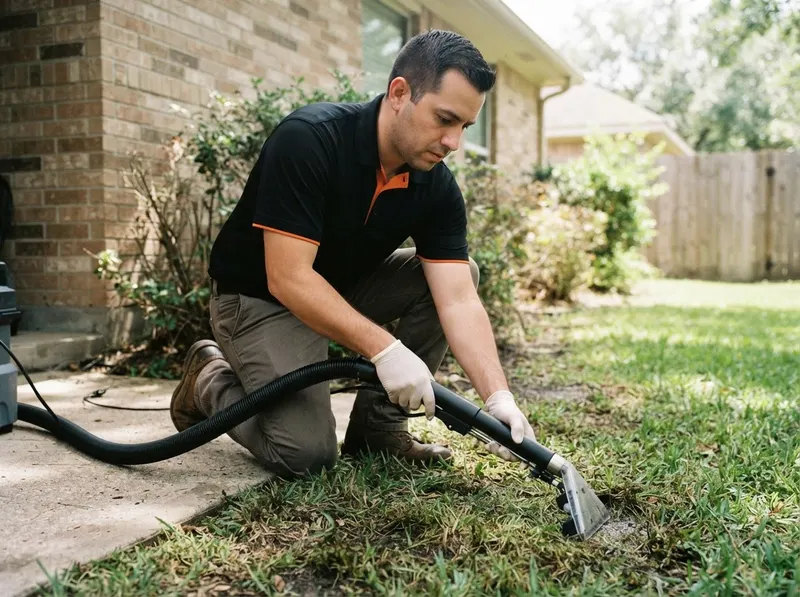
Gulf Coast climate patterns produce severe flea (*Ctenocephalides felis*) and tick (*Rhipicephalus sanguineus*) pressure due to extended humidity windows exceeding 70% and minimal winter freezes. In Houston properties, standard store-bought aerosol bombs fail because they deposit chemicals across horizontal tabletops while leaving larvae sheltered deep within carpet padding, crawlspace dirt, and shaded turf. A proper extraction integrates systemic insect growth regulators (IGRs) like pyriproxyfen with synthetic pyrethroids. This dual-action chemical approach prevents flea pupae from emerging from their protective cocoons while neutralizing mobile nymphs and adults on contact. Exterior treatment targets dense leaf litter, tall grass lines, and shaded soil perimeters where wild mammals transit.
Decision guidance dictates treatment selection based on property dynamics. If an infestation is isolated to an uncarpeted patio or single exterior run, localized targeted spray applications often suffice. If household occupants report flea bites above the ankle inside rooms or find engorged brown dog ticks along interior baseboards, comprehensive deep extraction is required. The trade-off centers on preparation intensity: complete extraction requires clearing all floor areas, laundering pet linens at 140°F, continuous vacuuming to stimulate pupal emergence, and vacating the structure for 3 to 4 hours while treatments dry, whereas superficial treatments carry zero vacating downtime but leave reproducing eggs and pupae intact.
Local structural profiles dictate distinct vector zones. Raised pier-and-beam foundations common in historic homes throughout The Heights and Montrose harbor damp, high-humidity crawlspaces that shelter urban wildlife carrying vector ticks. Conversely, sprawling suburban lots in Kingwood, Memorial, and Spring Branch face relentless tick reintroduction from deer and raccoons crossing greenbelt corridors. Properties in low-lying zones like Meyerland and Clear Lake require rigorous exterior perimeter treatments to prevent parasites from surviving seasonal standing water table surges. Every field protocol establishes a chemical barrier directly at the building envelope to stop parasites before indoor transition occurs.
Every job gets a firm, written price after a free on-site visit.
Tell us about your fleas and ticks deep extraction job in Houston and we'll send a clear, written quote, usually the same day.
 Silver Wagon Pest Control