Food-service facilities across Montrose, The Heights, and Downtown Houston face persistent pressure from German cockroaches and sewer-associated drain pests due to the high ambient humidity of the Gulf Coast.…
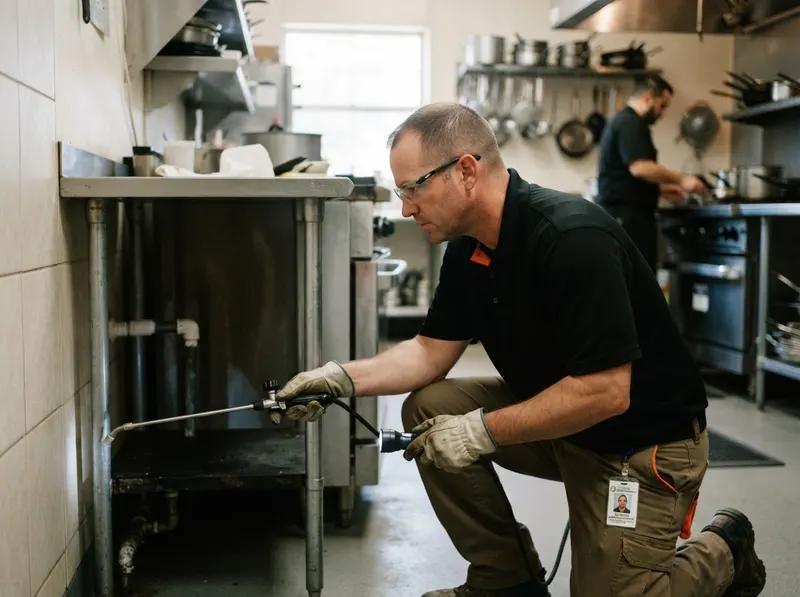
Food-service facilities across Montrose, The Heights, and Downtown Houston face persistent pressure from German cockroaches and sewer-associated drain pests due to the high ambient humidity of the Gulf Coast. Commercial kitchen sanitation and pest defense replaces ineffective retail perimeter sprays with targeted bio-enzymatic breakdown of organic fats, oils, and grease (FOG) layered beneath commercial cook lines, combined with non-repellent insect growth regulators (IGRs). When organic sludge accumulates in floor sinks and trench drains, pest populations reproduce rapidly inside void spaces behind stainless steel wall panels and under heavy prep tables.
Selecting standalone chemical spraying instead of comprehensive sanitation defense leaves root-cause food sources intact, resulting in recurring insect cycles every 21 days as new egg cases (oothecae) hatch. A targeted defense treatment addresses physical harborage: technicians inject micro-encapsulated formulations into unsealed hollow legs of food-prep tables, seal escutcheon plates around commercial plumbing penetrations, and clear organic waste using bio-foaming agents. The service trade-off centers on prep interruption: a full chemical-plus-sanitation protocol requires complete line shutdown and dry storage coverage for 4 to 6 hours during non-operational hours, whereas superficial spraying allows immediate access but fails to halt systemic structural infestations.
Properties situated near high-moisture drainage zones, including restaurants along Buffalo Bayou Park or commercial retail centers in Spring Branch and Garden Oaks, confront structural rodent pressure from the local municipal sewer network. In these environments, pest defense integrates physical structural exclusion, installing 16-gauge wire mesh screens over intake louvers, replacing deteriorated rubber sweep thresholds on heavy receiving doors, and sealing floor-wall junctions. Every treatment adheres strictly to Chapter 20 of the Houston Code of Ordinances for Food and Drugs, ensuring pest mitigation does not cross-contaminate food-contact surfaces or violate public health codes.
Every job gets a firm, written price after a free on-site visit.
Tell us about your commercial kitchen sanitation and pest defense job in Houston and we'll send a clear, written quote, usually the same day.
 Silver Wagon Pest Control