Pest control service in Houston addresses aggressive biological pressure driven by extreme sub-tropical humidity, saturated bayou soils, and dense urban sprawl. Immediate on-site structural forensics identify active entry conduits across crawlspaces, weep holes, and roof ridges before colonial infestations destroy building envelopes.
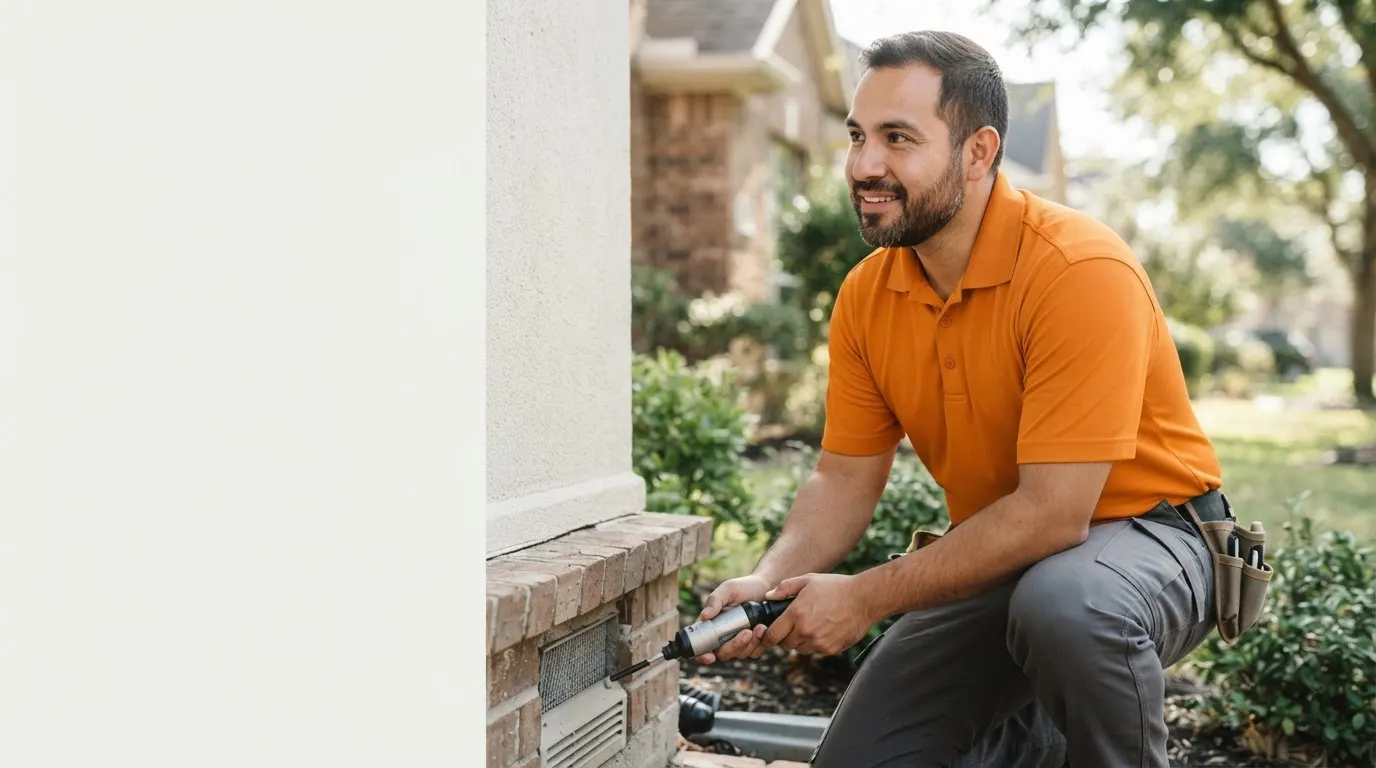
Pest Control Service company in Houston is a specialized structural mitigation discipline that eliminates wood-destroying insects, disease vectors, and invasive rodent populations across coastal Texas residential foundations and attics.
Every service reflects the same meticulous attention to detail, whether it's a single job or a larger pest control service project across Houston.
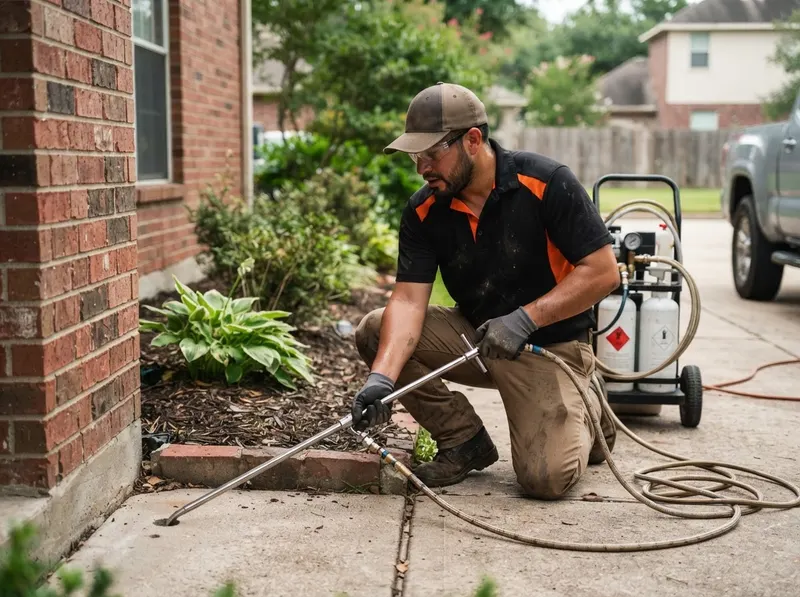
Formosan and subterranean termites consume sound structural lumber from the inside out, often remaining undetected within interior framing until substantial structural degradation occurs. Treatment protocols involve excavating a continuous 6-inch-wide by 6-inch-deep trench immediately adjacent to exterior foundation footings, applying liquid non-repellent termiticide at an exact rate of 4 gallons per 10 linear feet. Where concrete patios, driveways, or abutting walkways prevent trenching, technicians drill half-inch holes spaced 10 to 12 inches apart through the slab to saturate the underlying substrate. The non-repellent chemical binds directly with the coastal clay soil, creating an undetectable structural envelope that foraging termites pass through and transfer to colony members via trophallaxis, systematically eradicating queen chambers nesting deep beneath the moisture table.
Get a quote →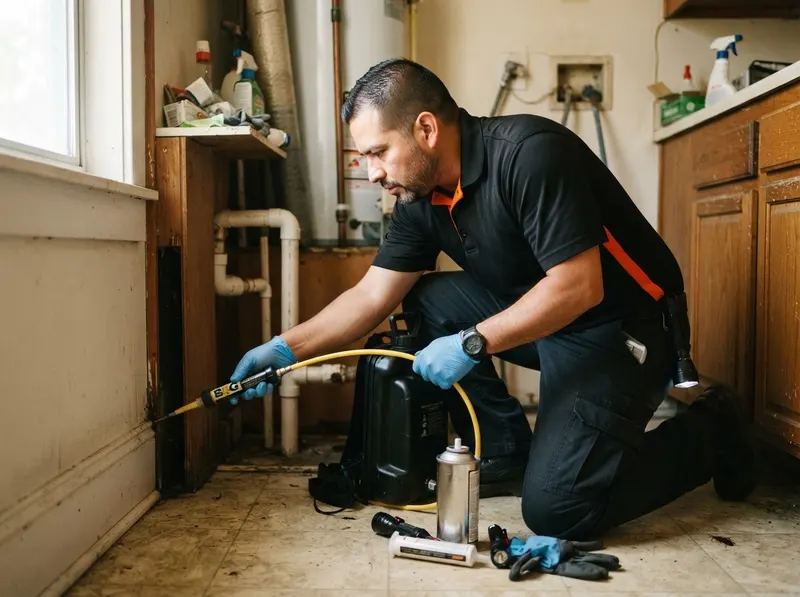
Cockroach infestations in coastal Texas fall into distinct biological classifications requiring radically different tactical deployments. American cockroaches, often emerging directly from municipal sewer mains and decaying tree leaf litter, exploit brick weep holes and oversized pipe penetrations to forage inside ground-level rooms. Technicians treat weep assemblies with fine micro-pulverized dust compounds and install specialized physical weep baffles. Conversely, German cockroaches rapidly colonize high-heat electrical housings, refrigerator compressor coils, and concealed cabinet voids. Eradication combines abamectin and hydramethylnon bait gels placed precisely at 3-millimeter micro-dots within cabinet hinge hardware, paired with synthetic pyriproxyfen insect growth regulators that disrupt chitin synthesis, halting the developmental molt cycle of juvenile nymphs and permanently neutralizing reproductive capacity.
Get a quote →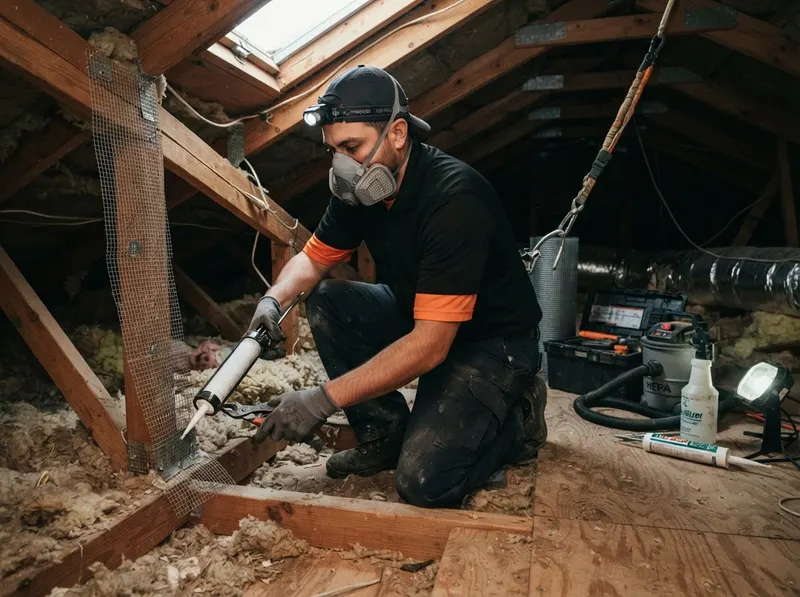
Roof rats exploit overhanging oak canopies and utility lines to gain access to upper architectural transitions, gnawing through cedar fascia, plastic louver vents, and soft soffit returns. Mitigation begins with a complete physical perimeter inspection from foundation to ridge cap. Field technicians seal all openings greater than one-quarter inch using heavy-gauge galvanized welded hardware cloth, structural silicone adhesive, and metal flashing to structurally deny future ingress. Inside the attic envelope, thermal-imaging cameras pinpoint high-traffic animal runs across blown fiberglass or cellulose insulation. Once all entry paths are sealed, a dense matrix of mechanical snap traps is placed along active structural runs, followed by industrial HEPA extraction of contaminated insulation materials, targeted bio-sanitizer fogging to neutralize dangerous pheromones, and deep enzymatic deodorization.
Get a quote →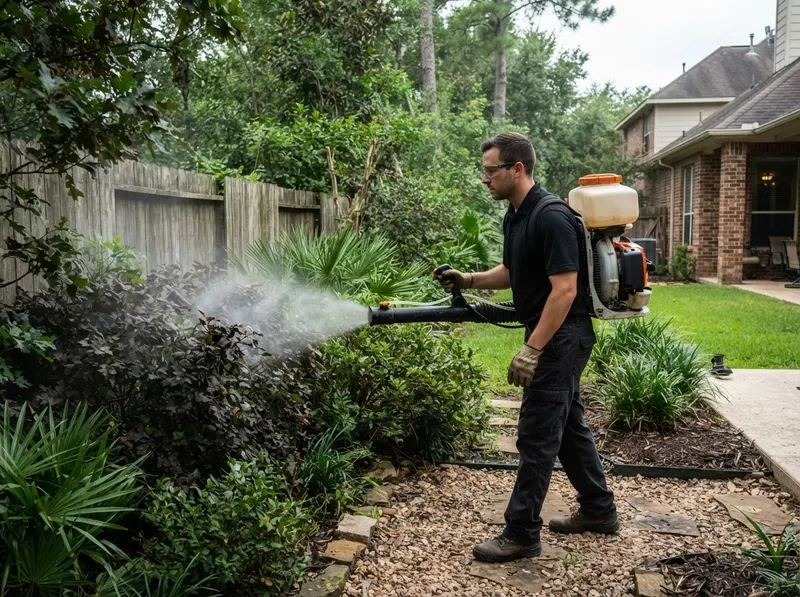
Houston rainfall events and flat drainage topographies create high volumes of stagnant water that accelerate the development cycles of Aedes and Culex mosquito species. Treatment programs bypass ineffective short-term aerosol blasts in favor of durable environmental suppression. Technicians identify low-lying retention swales, French drain discharge basins, and catch basins, deploying dense biological Bacillus thuringiensis israelensis briquettes that destroy mosquito larvae within 24 hours without harming birds or non-target aquatic organisms. Surrounding foliage, shaded soffits, and foundational shrubs up to 10 feet in height are treated with micro-encapsulated synthetic pyrethroids designed with proprietary weather-resistant surfactants that adhere to plant leaves through repeated tropical rainstorms, delivering 21 to 30 days of active adult knockdown.
Get a quote →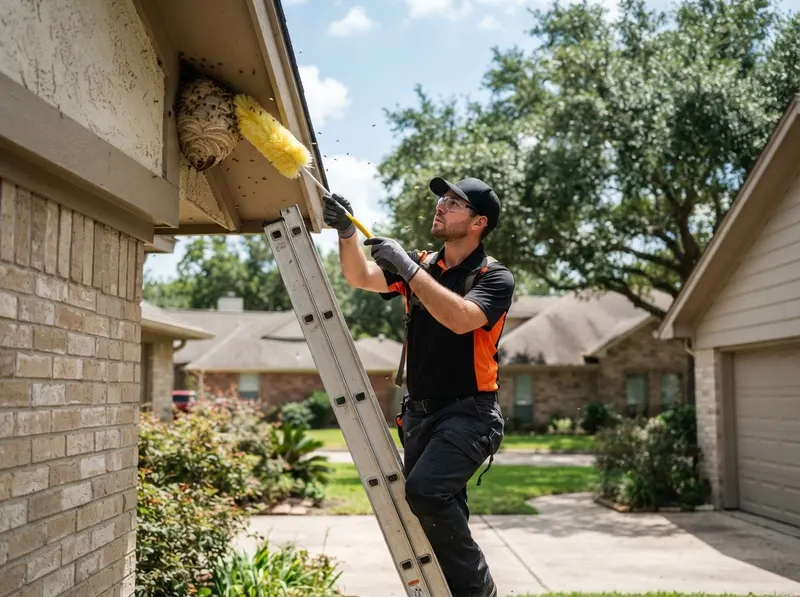
Paper wasps, bald-faced hornets, and invasive yellowjackets construct aerial and void-based nests beneath residential eaves, window trim, decorative stonework, and air conditioning compressor covers. Technicians use telescoping pressurized injection wands to deliver concentrated, non-flammable pyrethroid formulations directly into the core nest structure from safe working distances. The formulation initiates rapid neuromuscular collapse within 15 to 30 seconds, eliminating protective swarming behaviors. Technicians then mechanically scrape and extract the physical hive structure, scrubbing the anchor substrate with enzymatic cleaning compounds to break down residual homing pheromones that attract returning scouting queens from neighboring properties later in the season.
Get a quote →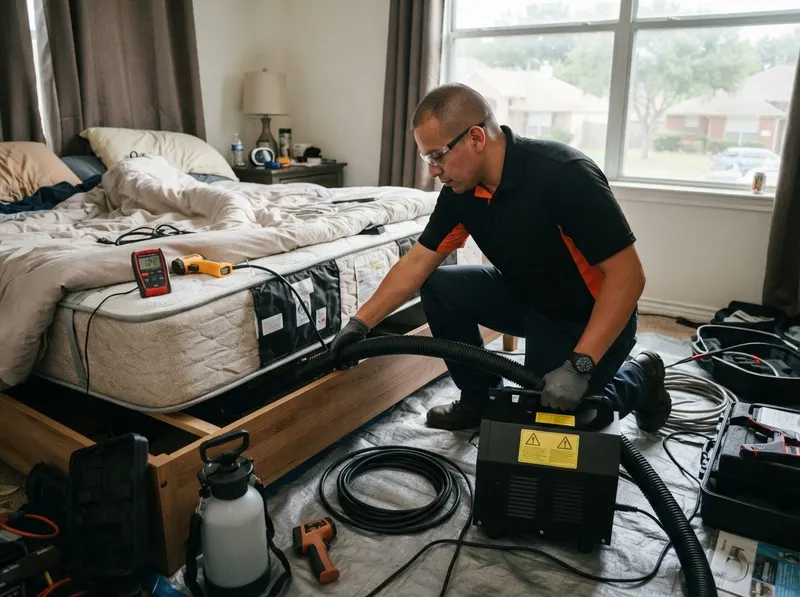
Bed bugs inhabit micro-crevices within mattress seams, wooden box springs, headboards, baseboard tracks, and electrical outlet boxes, developing severe resistance to retail pyrethroid sprays. Professional eradication integrates high-output thermal air remediation with deep-void chemical desiccant application. Specialized industrial heating units elevate ambient indoor room temperatures to a sustained 122 to 135 degrees Fahrenheit, monitoring internal wall core temps via digital thermal sensors to achieve total thermal mortality across all life stages, including heat-resistant eggs. Following targeted thermal saturation, technicians inject amorphous silica dust and dual-action residual insecticides into exterior wall plate junctions, carpet tack strips, and framing seams to establish a protective barrier against potential reintroduction.
Get a quote →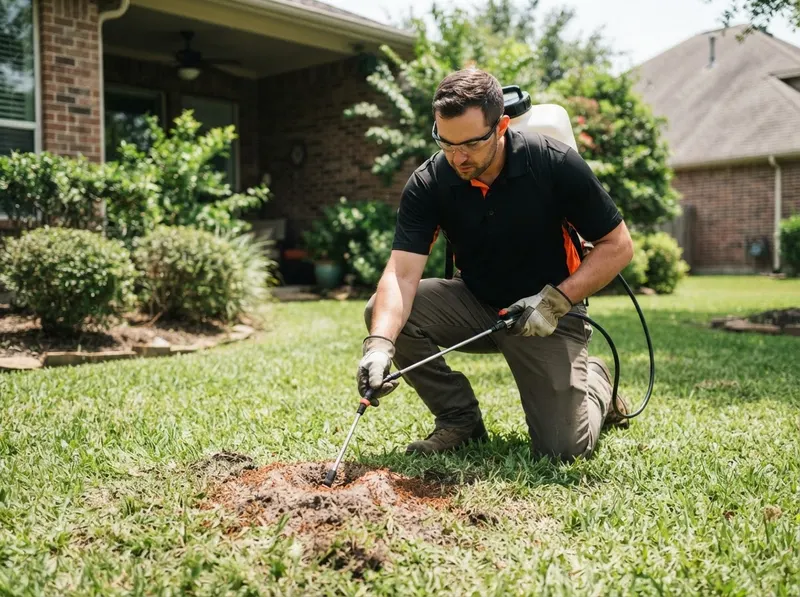
Red imported fire ants colonize open lawn spaces, landscape bedding, and soil adjacent to electrical transformer boxes, generating complex subterranean tunnel networks that extend multiple feet below ground level. Surface-level homeowner mound treatments scatter the colony, encouraging the primary queen to split the brood into multiple satellite chambers. Professional remediation utilizes pressurized deep-probe soil injectors that force dynamic micro-solutions of fipronil straight into the subterranean brood nursery. For broad acreage protection, technicians calibrate mechanical broadcast spreaders to distribute slow-release juvenile hormone baits across turf zones. Foraging worker ants carry these granular baits deep underground to feed the fertile queen, arresting egg production and collapsing whole colony populations within two to three weeks.
Get a quote →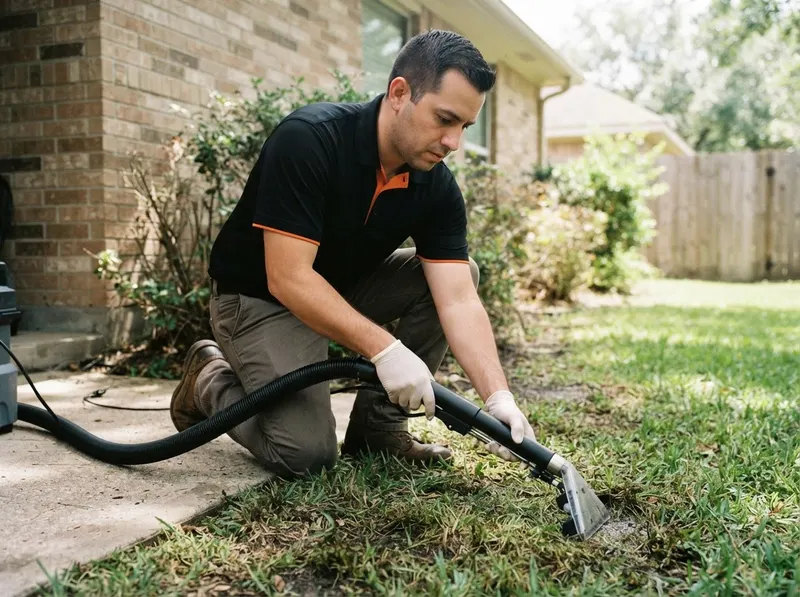
Persistent flea and tick infestations in coastal Texas thrive within high-humidity crawlspaces, dense ground-cover landscaping, and interior carpeting where domestic pets bed down. Professional eradication pairs an adulticidal knock-down compound with an active insect growth regulator like methoprene. Technicians systematically treat all interior flooring, focusing heavily on baseboard margins, closet perimeters, and under-furniture carpet pile. The formulation kills active adult biting populations on contact while saturating the pupal and larval bedding zones to prevent dormant flea pupae from emerging. Exterior dog runs, shaded patio perimeters, and foundation margins are treated concurrently with moisture-stable micro-suspension sprays to break the outdoor-to-indoor parasitic transfer loop entirely.
Get a quote →You get a firm, itemized quote for your pest control service before any work begins, no surprises, no pressure.
Careful prep, tidy work, and a full cleanup when we are done. We treat your home and belongings like our own.
The same trusted, background-checked team from the first call to the final check.
Selecting appropriate intervention protocols demands aligning the biological profile of the target organism with the structural vulnerabilities of the property. If structural framing exhibits hollowed timber, earthen shelter tubes along foundation perimeters, or discarded subterranean swarmer wings along window sills, choose specialized termiticide barrier injection rather than perimeter aerosol spraying. Liquid termiticides bond to soil particles and transfer through social grooming behaviors to eliminate the reproductive queen deep within subterranean moisture pockets, whereas topical surface sprays merely kill foraging workers without interrupting the primary nesting colony.
If roaches appear strictly inside kitchen cabinet hinges, appliance motor housings, and plumbing wall chases, select dual-action bait matrices paired with insect growth regulators rather than basic baseboard repellents. Repellent formulations trigger reproductive dispersal, forcing pregnant females into adjacent living spaces, while micro-dose bait compounds exploit cannibalistic coprophagy inside deep structural voids. If scratching sounds, chewed insulation, or scurrying noises emerge from attic drywall and ceiling spaces between midnight and dawn, commission roof-line hardware-cloth exclusion rather than interior snap traps.
Interior trapping without structural sealing results in perpetual re-infestation as external roof rats follow thermal updrafts and pheromone trails directly through uncapped fascia transitions and gable vents. If exterior biting insect pressure makes outdoor yards unusable from May through October, select targeted source reduction paired with slow-release micro-encapsulated barrier misting and biological larvicides rather than broad-spectrum thermal fogging. Thermal fogs disperse within hours under coastal winds, while micro-encapsulated polymers bond to shaded leaf undersides and resist Houston rain downpours for multiple weeks.
The operational trade-off across all methodologies centers on intervention depth versus immediate disruption: systemic chemical soil trenching, sub-slab foundation drilling, and comprehensive roof-line ridge exclusions carry higher upfront labor investments, mechanical property modifications, and physical access requirements, but permanently sever biological colonization cycles that cheap, topical surface applications fail to disrupt.
Every project gets a firm, written price after a free on-site visit. Ranges below for orientation.
Tell us about your pest control service job and we'll send a clear, written quote, usually the same day. Or just call and talk to a real Houston pro.
(346) 776-1663
Houston properties face accelerated biological decay due to the hyper-saturated clay soils of the Beaumont Formation and perpetual high humidity along Buffalo Bayou Park and Hermann Park. The shifting nature of local black gumbo clay causes constant structural expansion and contraction against residential slabs, creating micro-fissures through foundation perimeters that grant immediate subterranean access to wood-destroying organisms and burrowing pests. Uncapped brick weep holes, designed strictly to vent trapped moisture behind brick veneer along historic residences in River Oaks, West University Place, and Memorial, provide direct superhighways for American cockroaches and roof rats traversing from adjacent mature oak tree canopies near Memorial Park and Minute Maid Park. In low-lying, flood-prone bayou sectors like Meyerland and Kingwood, saturated soil water tables push subterranean pests upward into structural framing, turning subfloor voids into high-humidity incubators. Furthermore, pier-and-beam foundations throughout The Heights, Montrose, and Garden Oaks trap coastal moisture beneath tongue-and-groove pine floorboards, creating primary breeding hubs for devastating Formosan subterranean termite super-colonies that hollow out untreated timber framing in a fraction of the time required by native subterranean species. Modern transit corridors like Interstate 610, Interstate 10, and Interstate 69 act as artificial dispersal routes for non-native urban pests, accelerating the movement of resistant rodent and insect species directly across Harris County residential borders.
Free estimates for Houston & the surrounding area.
 Silver Wagon Pest Control